Understanding which sizes of pet cages dominate wholesale markets is critical for retailers, distributors, and manufacturers aiming to optimize inventory, meet customer demand, and maximize profitability. The wholesale pet supply industry operates on tight margins and high volume, making it essential to stock the right dimensions that align with both consumer preferences and practical retail considerations. Popular sizes vary significantly based on target animal species, regional market trends, housing space availability, and evolving consumer expectations around pet welfare and comfort. This article examines the specific size ranges that consistently perform best in wholesale channels, the factors driving their popularity, and how businesses can make informed stocking decisions based on market data and buyer behavior patterns.
Wholesale buyers typically prioritize pet cages that balance affordability, shipping efficiency, and broad market appeal. The most popular sizes are those that accommodate the largest segments of pet ownership while remaining practical for retail display and consumer transportation. Small to medium-sized pet cages for dogs, cats, rabbits, and guinea pigs account for the majority of wholesale volume, with specific dimensional sweet spots emerging across different product categories. These preferred sizes reflect a convergence of manufacturing economies of scale, standardized shipping container dimensions, and the demographic reality that most pet owners live in apartments or homes with limited space. Recognizing these patterns allows wholesale buyers to concentrate purchasing power on high-turnover inventory while minimizing the risk of slow-moving oversized or undersized units.
The small pet cage segment, typically ranging from 24 to 30 inches in length, represents one of the highest-volume categories in wholesale markets. These dimensions are ideal for cats, toy breed dogs, and temporary housing applications such as veterinary recovery or travel. Wholesale buyers favor these sizes because they appeal to urban pet owners with space constraints and align with the growing trend of apartment living across major metropolitan areas. The 24-inch length model often serves as an entry-level option for budget-conscious consumers, while 30-inch variants provide slightly more comfort without significantly increasing retail price points. These compact pet cages typically feature heights between 18 and 21 inches, creating sufficient vertical space for small animals while maintaining stackability for efficient warehouse storage and retail merchandising.
Within the small cage category, the 28-inch length dimension has emerged as a particularly popular wholesale choice because it strikes an optimal balance between animal comfort and practical portability. This size accommodates cats up to 12 pounds and small dog breeds comfortably for short-term containment, making it versatile across multiple pet types. Wholesale distributors report strong repeat ordering patterns for pet cages in this size range because they satisfy both impulse purchases and planned acquisitions. The dimensional specifications typically include widths of 18 to 20 inches and heights near 20 inches, creating approximately 7 to 8 cubic feet of interior space. This volume provides adequate room for a small pet bed, water bowl, and limited movement without overwhelming consumers who must transport the cage from retail locations to their vehicles and homes.
Wholesale market preferences for small pet cages extend beyond pure dimensions to include construction materials and feature sets that influence buying decisions. Wire mesh models with plastic bottom trays dominate this size category due to their lightweight construction, ventilation advantages, and cost-effectiveness in bulk manufacturing. The most popular wholesale units incorporate folding mechanisms that reduce packaged dimensions by approximately 60 percent, significantly lowering shipping costs and improving retail shelf efficiency. Door configurations typically include single front-access points for budget models and dual-door designs for premium variants, with wholesale pricing reflecting these feature differences. The small size category also sees strong demand for pet cages with removable dividers, allowing retailers to market them as adjustable solutions that grow with puppies or accommodate multiple small animals temporarily.
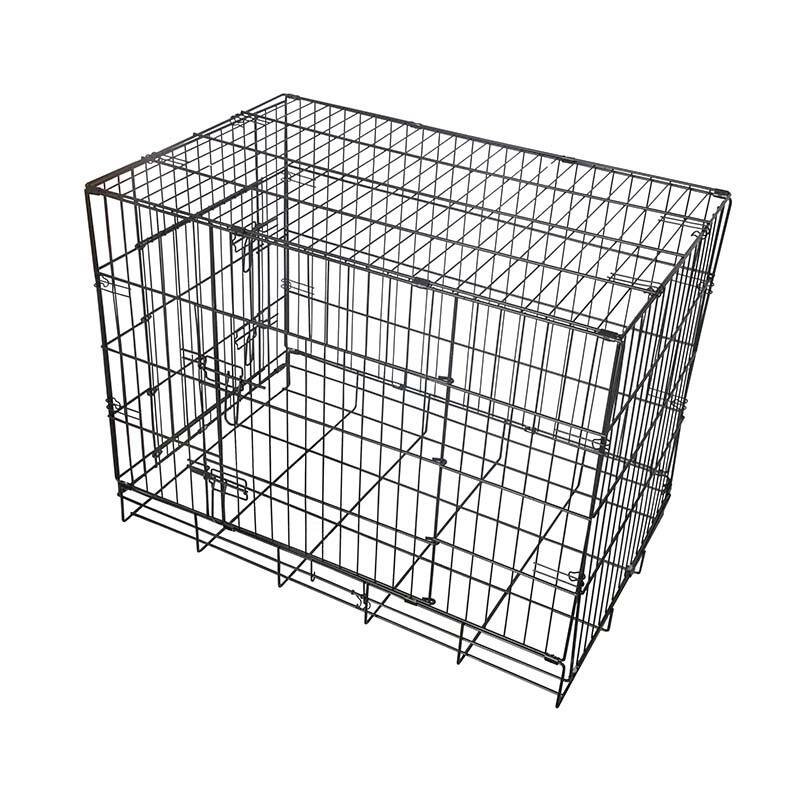
Medium pet cages, spanning 36 to 42 inches in length, constitute the largest volume segment in wholesale markets when measured by both unit sales and revenue generation. This size range accommodates the most common dog breeds, including Beagles, Cocker Spaniels, Bulldogs, and mixed breeds in the 25 to 50-pound weight range. The 36-inch model serves as the industry standard for medium dog containment, offering sufficient space for an adult dog to stand, turn around, and lie down comfortably according to humane housing guidelines. Wholesale buyers consistently prioritize pet cages in this dimensional category because they represent the sweet spot of market demand, with retail turnover rates typically exceeding smaller and larger alternatives. The height specifications for medium cages usually range from 24 to 27 inches, providing adequate vertical clearance for medium-statured dogs without creating excessive material costs or shipping weight penalties.
The 42-inch length variant within the medium category has gained substantial wholesale market share over the past several years as consumer preferences shift toward more spacious containment options. This size increase of six inches over the 36-inch standard provides approximately 30 percent more interior volume, significantly improving animal comfort during extended crating periods such as overnight sleeping or full workday containment. Wholesale pricing for 42-inch pet cages typically runs 15 to 20 percent higher than 36-inch models, but this premium aligns with consumer willingness to pay for enhanced animal welfare. Distributors report that retailers increasingly feature 42-inch cages as their recommended medium-dog option, positioning 36-inch models as economy alternatives rather than primary recommendations. The dimensional specifications generally include 28 to 30-inch widths and 28 to 30-inch heights, creating a more proportional interior space that feels less confining to both pets and observing owners.
Wholesale demand for medium-sized pet cages increasingly favors models with multi-functional design elements that extend utility beyond basic containment. Popular features in this size range include integrated divider panels that allow the cage to adapt as puppies grow from small to medium adult size, eliminating the need for consumers to purchase multiple units over a dog's first year. Top-selling wholesale models incorporate dual-door configurations with both front-access and side-access entry points, improving placement flexibility in various home layouts and making it easier for owners to interact with pets without fully opening the cage. The 36 to 42-inch size category also sees strong wholesale interest in pet cages with removable plastic trays that extend beyond the wire frame for easy cleaning, elevated leg designs that improve air circulation beneath the unit, and reinforced corner construction that enhances structural integrity during repeated assembly and disassembly cycles common in households that travel frequently with pets.
Large pet cages, defined as units between 48 and 54 inches in length, serve the substantial market segment of large-breed dog owners including those with German Shepherds, Labrador Retrievers, Golden Retrievers, and similar breeds weighing 60 to 90 pounds. The 48-inch dimension represents the entry point for large cage classifications and remains the most popular wholesale size within this category due to its balance between animal accommodation and practical handling limitations. These pet cages typically feature heights of 30 to 33 inches and widths of 30 to 32 inches, creating interior volumes approaching 30 cubic feet. Wholesale buyers appreciate that large cages in the 48-inch range remain manageable for average consumers to transport and position without assistance, while still meeting minimum space recommendations from veterinary and animal welfare organizations. The manufacturing and shipping costs for large pet cages increase substantially compared to medium alternatives, typically resulting in wholesale price points 50 to 70 percent higher, which influences inventory depth decisions among distributors serving price-sensitive retail channels.
Extra-large pet cages measuring 54 inches and beyond address specialized market needs for giant breed dogs such as Great Danes, Mastiffs, and Saint Bernards, though wholesale volumes in this category represent a small fraction of overall cage sales. The logistics challenges associated with extra-large units significantly impact wholesale popularity, as dimensional weight calculations for shipping often result in freight costs that approach or exceed the product manufacturing cost. Retail storage requirements for 54-inch pet cages also limit distribution, as many independent pet stores and smaller chain locations lack floor space to display these units effectively. Wholesale buyers typically order extra-large cages in limited quantities for special order fulfillment rather than maintaining deep stock levels. The market for these oversized pet cages concentrates among specialty retailers, agricultural supply outlets serving rural markets with higher giant-breed ownership rates, and online-only retailers who can manage direct-from-manufacturer dropshipping arrangements that bypass traditional wholesale inventory models.
Wholesale preferences for large and extra-large pet cages emphasize heavy-duty construction specifications that ensure structural integrity under the stress of powerful, large-breed animals. Wire gauge measurements decrease from the 3mm standards common in small cages to 4mm or thicker for large models, with some extra-large units incorporating 5mm wire to prevent bending or breakage. Wholesale buyers prioritize pet cages with reinforced door frames and multiple-point latch systems, as large dogs can exert substantial force when motivated by separation anxiety or external stimuli. Corner construction typically upgrades from simple spot-welding to full corner plates or continuous welded seams that distribute stress across broader areas. The plastic tray components in large pet cages require thicker material gauges and ribbed reinforcement patterns to prevent warping under the weight of large animals, with wholesale quality standards typically specifying minimum tray thicknesses of 2.5mm for 48-inch models and 3mm for units 54 inches and larger.
Geographic market segmentation significantly influences which pet cage sizes perform best in wholesale channels serving different regional demographics. Urban and suburban markets demonstrate strong preference for small to medium pet cages in the 24 to 42-inch range, reflecting the reality that apartment living and smaller home footprints limit both pet size choices and available space for containment equipment. Wholesale distributors serving metropolitan retail networks report that 36-inch medium cages represent their highest-volume SKU, often accounting for 30 to 40 percent of total cage unit sales. Rural markets display more diverse size distribution, with substantial demand extending into large and extra-large categories as homeowners with greater property space more frequently own large-breed dogs. Wholesale buyers targeting agricultural regions and small-town retailers typically maintain broader size assortments, though the absolute unit volumes for any single size remain lower than urban market concentration patterns. These geographic differences influence wholesale purchasing strategies, with urban-focused distributors achieving greater inventory efficiency through concentrated stock in fewer high-turnover sizes.
The distribution channel through which pet cages reach end consumers substantially affects wholesale size preferences and ordering patterns. Traditional brick-and-mortar pet retailers prioritize small to medium pet cages that consumers can physically transport from store to vehicle without delivery services, typically limiting floor stock to units 42 inches or smaller. These retailers order larger cages from wholesalers on a special-order basis, avoiding the carrying costs and display space requirements of low-turn inventory. Online retail channels demonstrate markedly different size distribution patterns, with large and extra-large pet cages representing a much higher percentage of sales due to the built-in home delivery expectation of e-commerce transactions. Wholesale distributors serving online retailers report more balanced size assortments across their order volumes, though medium cages still dominate absolute unit counts. The dimensional weight shipping cost calculations for large cages create interesting dynamics in online retail, with some e-commerce sellers preferring to work directly with manufacturers for large-unit fulfillment rather than purchasing through traditional wholesale channels that add handling and storage markup before ultimate shipment to consumers.
Retail price positioning strategies create distinct wholesale demand patterns across pet cage size categories, with budget retailers concentrating purchases in smaller dimensions that yield lower absolute retail prices despite higher per-cubic-foot costs. Discount chains and mass-market retailers typically focus wholesale orders on 24 to 36-inch pet cages that can be retailed below psychological price thresholds of fifty or seventy-five dollars, maximizing impulse purchase potential and minimizing sticker shock. Premium pet retailers and specialty shops demonstrate greater willingness to stock 42 to 48-inch cages despite higher retail price points, as their customer base self-selects for higher spending levels and greater emphasis on pet comfort and welfare. Wholesale buyers serving premium channels report that larger pet cages often generate superior gross margin dollars even when unit sales velocity lags behind smaller alternatives, creating financial incentives to maintain broader size assortments. The wholesale pricing structure itself reinforces these patterns, as quantity break thresholds for volume discounts typically require smaller absolute order quantities for large-cage SKUs compared to small-cage items, partially offsetting the higher per-unit capital requirements.
Growing societal emphasis on animal welfare and humane treatment standards is gradually shifting wholesale pet cage size preferences toward larger dimensions across all categories. Veterinary organizations and animal advocacy groups increasingly promote minimum space guidelines that exceed traditional industry standards, recommending that pets have sufficient room to exhibit natural behaviors and maintain physical conditioning even during containment periods. These recommendations influence consumer purchasing decisions and subsequently affect wholesale demand patterns as retailers respond to customer requests for more spacious options. The practical manifestation in wholesale markets appears as gradual market share migration from the smaller end of each size category toward the larger end, with 30-inch models gaining ground against 24-inch alternatives in the small category and 42-inch cages expanding share versus 36-inch standards in the medium segment. Wholesale distributors increasingly position their product lines to accommodate this trend, often introducing new SKUs that add 2 to 4 inches to established size standards while maintaining similar price points through manufacturing efficiency improvements or modest margin compression.
Innovation in modular pet cage designs is creating new wholesale product categories that challenge traditional fixed-size classifications. These systems allow consumers to purchase base units in standard sizes and add extension panels to increase length, width, or height as needed for growing animals or changing circumstances. Wholesale interest in modular pet cages reflects retailer desire to reduce SKU proliferation while maintaining the ability to serve diverse customer needs. The base modules in these systems typically conform to popular standard sizes in the 36 to 42-inch range to ensure broad applicability, with extension components sold separately as accessories. This approach allows wholesale buyers to concentrate inventory investment in fewer base unit sizes while offering apparent customization through add-on purchases. The modular category remains relatively small in total wholesale volume compared to traditional fixed-size cages, but growth rates substantially exceed the mature conventional market, suggesting potential for meaningful market share capture over coming years as manufacturers refine designs and consumers become more aware of expandable options.
Environmental sustainability concerns are beginning to influence wholesale pet cage size preferences through their impact on material usage efficiency and shipping optimization. Manufacturers and wholesale distributors increasingly evaluate cage designs based on material-to-functionality ratios, favoring sizes that maximize interior volume while minimizing raw material consumption and embodied manufacturing energy. This analysis sometimes reveals that mid-range sizes offer superior efficiency metrics compared to smaller alternatives due to the proportional reduction in material required for structural elements relative to usable space created. Wholesale buyers serving environmentally conscious retail channels report growing interest in pet cages manufactured from recycled materials or designed for end-of-life recyclability, with size selections influenced by which dimensions allow manufacturers to achieve sustainability goals while maintaining competitive pricing. Shipping efficiency considerations also factor prominently in sustainability-focused procurement, with wholesale buyers calculating carbon footprint implications of various size options based on container utilization rates and the relationship between packaged dimensions and standard freight configurations.
The 36-inch length cage consistently ranks as the highest-volume wholesale item across most distribution channels, primarily because it accommodates the most common dog breeds owned by the majority of pet-owning households. This size represents the optimal intersection of broad market applicability, manageable consumer handling, reasonable retail pricing, and efficient wholesale logistics. While smaller cages sell in high volumes for cats and toy breeds, and some regions show strong demand for 42-inch models, the 36-inch dimension maintains the largest overall wholesale market share when aggregated across all retail channels and geographic markets.
Wholesale buyers typically analyze retail sales data from their customer base to identify high-turnover sizes, then concentrate inventory investment in the top three to five dimensions that generate approximately 70 to 80 percent of total volume. They consider factors including regional pet ownership demographics, retail channel characteristics, available warehouse space, shipping cost efficiency, and manufacturer minimum order quantities when finalizing size assortments. Many distributors employ inventory management software that tracks sales velocity by SKU and automatically triggers reorders for fast-moving sizes while flagging slow-turn items for clearance or discontinuation. Seasonal patterns also influence stocking decisions, with wholesale buyers often increasing depth in smaller cage sizes during spring kitten and puppy seasons when new pet adoptions peak.
Wholesale data indicates gradual but consistent growth in demand for larger cage sizes across all categories over the past decade, driven primarily by increasing consumer awareness of animal welfare standards and willingness to allocate more living space to pets. The 42-inch medium cage has gained substantial market share from the traditional 36-inch standard, and 48-inch large cages show stronger growth rates than smaller alternatives within the large-dog category. However, this trend toward larger sizes proceeds slowly due to countervailing factors including urban housing space limitations, transportation challenges for consumers, and higher retail price points that limit purchase conversion rates. Wholesale buyers report that while larger cages grow faster in percentage terms, absolute unit volumes for mid-range sizes still substantially exceed large-format alternatives, suggesting the size distribution shift will occur gradually over many years rather than representing a rapid market transformation.
Yes, international wholesale markets display distinct size preferences that reflect regional pet ownership patterns, housing characteristics, and cultural attitudes toward animal containment. European wholesale buyers typically favor smaller cage dimensions on average compared to North American counterparts, with 30 to 36-inch models dominating sales due to more compact living spaces and higher prevalence of small dog breeds and cats as urban pets. Asian markets show even stronger concentration in small cage categories, with 24 to 30-inch units representing the bulk of wholesale volume in densely populated urban centers. Conversely, markets in Australia and parts of Latin America demonstrate size preferences more similar to North American patterns, with substantial demand for medium to large cages reflecting spacious housing and preference for larger dog breeds. These international variations require global wholesale distributors to maintain region-specific inventory assortments rather than applying universal size distribution models across all markets.
 Hot News
Copyright © 2026 Top Trust Biotechnology Co., Ltd All Rights Reserved Privacy policy
 EN
EN
 AR
AR
 FR
FR
 PT
PT
 ES
ES
 VI
VI
 BG
BG
 HR
HR
 CS
CS
 DA
DA
 NL
NL
 FI
FI
 DE
DE
 EL
EL
 HI
HI
 IT
IT
 JA
JA
 KO
KO
 NO
NO
 PL
PL
 RO
RO
 RU
RU
 SV
SV
 TL
TL
 IW
IW
 SK
SK
 SL
SL
 ET
ET
 HU
HU
 TH
TH
 TR
TR
 MS
MS
 IS
IS
 KA
KA
 BN
BN
 LA
LA
 MN
MN
 NE
NE
 UZ
UZ