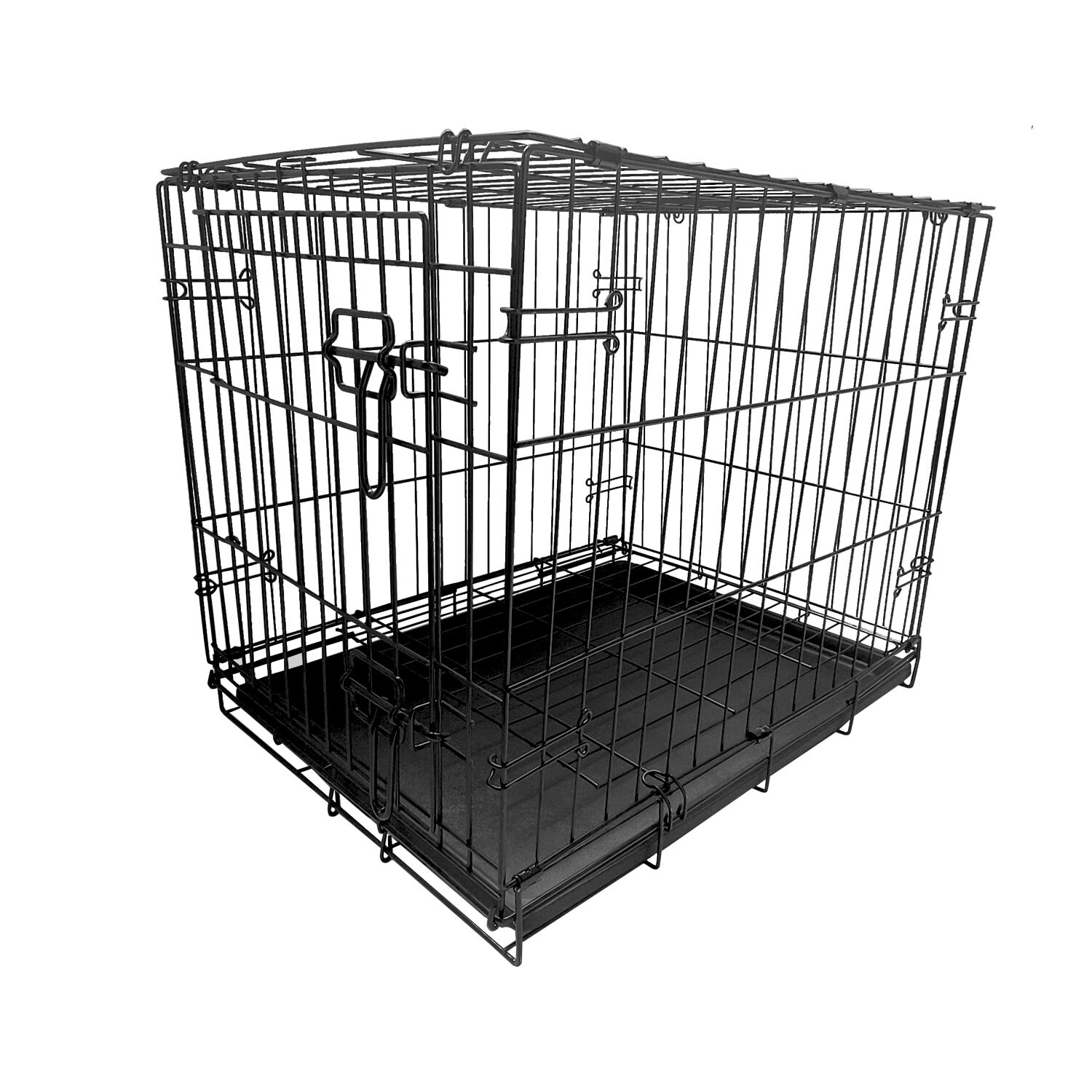
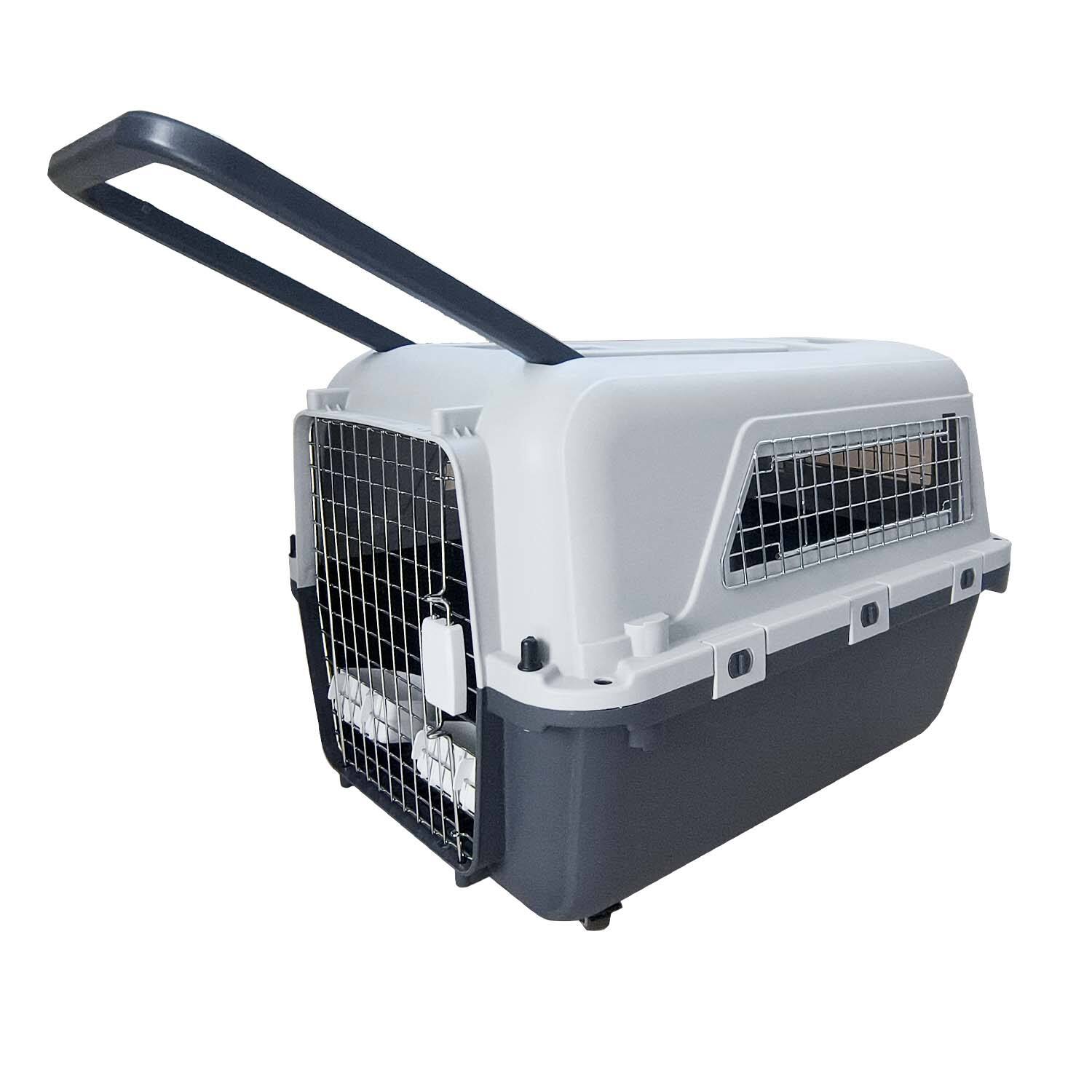
Retailers operating in the pet care industry face constant pressure to maximize space efficiency while maintaining optimal animal welfare standards and operational flexibility. Stackable pet cages have emerged as a strategic solution that addresses multiple pain points simultaneously, from space optimization in constrained retail environments to streamlined inventory management during peak seasons. Understanding the specific applications where these modular housing systems deliver measurable business value enables retailers to make informed investment decisions that align with both operational requirements and animal welfare commitments.
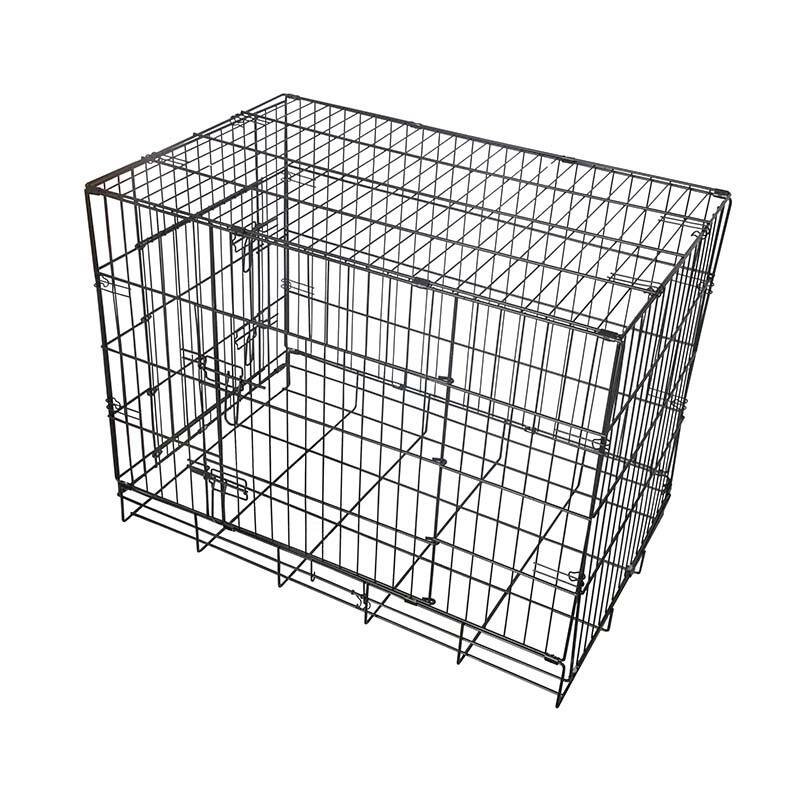
The practical utility of stackable pet cages extends far beyond simple vertical storage, encompassing diverse retail scenarios from temporary holding during adoption events to long-term quarantine protocols and breed-specific display configurations. This article examines the concrete applications where these systems prove most valuable for retail operations, exploring how specific design characteristics align with distinct business needs across pet store formats, veterinary retail settings, and specialty animal retailers. By analyzing real-world implementation scenarios, retailers can identify which applications best justify the investment in stackable pet cages for their particular business model and customer base.
Pet retailers frequently encounter situations where customers require temporary animal housing while completing extended shopping sessions or waiting for grooming services to finish. Stackable pet cages provide an ideal solution for these short-duration holding needs, allowing staff to accommodate multiple animals simultaneously without permanently dedicating floor space to this ancillary function. The vertical configuration maximizes capacity during busy weekend periods when demand for temporary holding spikes, while the modular design allows retailers to quickly reconfigure the setup based on real-time customer flow patterns.
The flexibility inherent in stackable systems proves particularly valuable during seasonal peaks when retailers need to temporarily expand capacity without investing in permanent infrastructure. Holiday shopping periods, back-to-school seasons, and summer vacation times all create distinct demand patterns that stackable pet cages accommodate through rapid deployment and equally swift removal when demand normalizes. This application reduces the need for oversized permanent holding areas that remain underutilized during off-peak periods, directly improving the return on retail space investment.
Retailers implementing stackable pet cages for temporary holding report improved customer satisfaction metrics, as pet owners appreciate the professional appearance and secure containment these systems provide compared to makeshift holding solutions. The visual presentation matters significantly in retail environments where customers evaluate facility quality as part of their overall service assessment. Clean, well-organized stackable configurations communicate professionalism and animal care competence, reinforcing brand positioning as a quality-focused retailer.
Retail operations that coordinate animal transfers between locations or prepare pets for customer transport home benefit substantially from dedicated transition zones equipped with stackable pet cages. These areas serve as acclimation spaces where animals can recover from transport stress before being moved to permanent display areas or prepared for final customer handoff. The stackable configuration allows retailers to create multi-level recovery zones in compact spaces, segregating animals by species, size, or stress level to optimize recovery conditions.
The application extends to preparing animals for outbound transport, where stackable systems enable retailers to stage multiple animals for coordinated transfers while maintaining separation and reducing anxiety through visual barriers between units. Retailers managing inventory across multiple locations find this staging capability essential for efficient logistics coordination, as it allows batch processing of transfers while maintaining individual animal welfare standards throughout the preparation period.
Responsible retail operations implement quarantine periods for newly received animals before introducing them to general display populations, preventing potential disease transmission that could devastate entire inventory categories. Stackable pet cages provide space-efficient quarantine zones that enable retailers to maintain strict separation protocols without consuming excessive floor space that could otherwise generate revenue through customer-facing displays. The vertical stacking allows higher quarantine capacity within designated back-of-house areas, supporting larger inventory turns without expanding physical footprints.
The containment characteristics of quality stackable systems prevent cross-contamination between quarantine levels through integrated waste management features and separate ventilation pathways. Retailers can assign different stack levels to different intake dates, creating a visual management system that staff can quickly reference to determine quarantine completion schedules. This organizational clarity reduces human error in quarantine protocols, a critical factor in preventing costly disease outbreaks that can require entire inventory destruction and extended business interruption.
Implementation of stackable pet cages in quarantine applications also facilitates more rigorous health monitoring, as the concentrated layout allows veterinary staff or trained employees to complete health assessments more efficiently than when animals are dispersed across multiple floor-level locations. The time savings translate directly to labor cost reduction while simultaneously improving health surveillance quality through increased observation frequency.
Retailers offering veterinary services or coordinating medical care for inventory animals require dedicated recovery spaces where post-procedure monitoring can occur without disruption from active retail traffic. Stackable pet cages create controlled recovery environments where lighting, temperature, and visual stimulation can be managed independently from general retail conditions. The ability to stack recovery units vertically proves especially valuable in veterinary retail settings where procedure volume may vary significantly, requiring flexible capacity that adjusts to daily caseloads.
The application addresses specific recovery protocol requirements, such as separating animals by procedure type, anesthesia recovery stage, or post-operative observation intensity. Retailers can designate specific stack positions for particular recovery phases, creating standardized workflows that reduce staff training complexity and improve consistency in post-procedure care quality. This systematized approach to medical recovery management represents a significant operational advantage over ad-hoc recovery area configurations.
Retail customers shopping for specific animal types or breeds appreciate organized display configurations that simplify the selection process and reduce time spent searching through mixed inventory. Stackable pet cages enable retailers to create vertical display zones organized by classification criteria such as breed, size category, age group, or behavioral characteristics. This organizational structure improves the customer shopping experience by presenting relevant options in concentrated visual fields, increasing the likelihood of successful matches between customer preferences and available inventory.
The vertical organization also allows retailers to implement dynamic pricing displays where premium inventory occupies eye-level positions while value-oriented options occupy lower or higher stack positions. This merchandising flexibility supports more sophisticated pricing strategies that maximize revenue per square foot of retail space. The stackable configuration makes it practical to adjust positioning quickly based on inventory movement patterns, ensuring high-demand items remain in optimal visibility positions.
Retailers implementing stackable pet cages for organized displays report reduced customer service time requirements, as the clear organizational logic allows customers to self-navigate inventory more effectively. This efficiency gain frees staff for higher-value consultative interactions rather than basic directional assistance, improving overall service quality while reducing labor cost per transaction.
The modular nature of stackable systems allows retailers to quickly reconfigure display arrangements to create demonstration areas where customers can interact with animals under supervised conditions. Individual units can be temporarily removed from stacks and relocated to interaction zones, then returned to the stack configuration after the customer session concludes. This flexibility supports a more experiential retail approach where tactile interaction drives purchasing decisions, particularly important for customers without prior pet ownership experience who need confidence-building interaction before committing to purchase.
The application proves especially valuable during special events such as adoption days, breed-specific showcases, or educational programs where retailers coordinate multiple customer interactions simultaneously. The ability to deploy stackable pet cages in various configurations supports diverse event formats without requiring permanent infrastructure changes, maximizing the versatility of retail space across different business activities.
Retail pet operations experience pronounced seasonal demand variations, with holiday periods generating inventory requirements that may double or triple baseline levels. Stackable pet cages provide a capital-efficient solution for accommodating these temporary capacity needs without investing in permanent infrastructure that remains underutilized during normal business periods. Retailers can rapidly deploy additional stack levels during surge periods, then disassemble and store the units when demand normalizes, maintaining optimal space utilization year-round.
The seasonal application extends beyond simple capacity expansion to include specialized inventory categories that only appear during particular seasons, such as Easter-related small animals or holiday gift pets. Stackable systems allow retailers to create temporary display zones dedicated to these seasonal categories without disrupting permanent display configurations, supporting merchandise presentation strategies that emphasize seasonal offerings while maintaining year-round inventory accessibility.
Implementation of stackable pet cages for seasonal capacity management also reduces the financial risk associated with inventory speculation, as the flexible housing infrastructure allows retailers to stock more aggressively during peak periods with confidence that adequate housing capacity exists. This operational confidence can translate to meaningful revenue gains when demand exceeds conservative inventory projections.
Retailers exploring expansion into new animal categories or testing market demand for specialty breeds face inherent uncertainty about whether the investment will generate sufficient returns. Stackable pet cages provide a low-commitment infrastructure option for pilot programs, allowing retailers to test new inventory categories without extensive facility modifications or permanent space allocation. The modular units can be deployed in temporary configurations that support market testing, then either expanded if demand materializes or removed if the category underperforms.
This application reduces the barrier to category expansion, encouraging more experimental approaches to merchandise assortment development. Retailers can respond more dynamically to emerging trends or local market opportunities when the infrastructure investment required for testing remains manageable. The flexibility inherent in stackable systems thus becomes a strategic enabler of business development rather than merely an operational convenience.
Pet retailers operating in urban markets face particularly acute space constraints due to high real estate costs and limited available square footage. Stackable pet cages address this fundamental challenge by multiplying effective housing capacity within existing footprints through vertical space utilization. The application proves critical for urban retailers who must maintain competitive inventory depth despite space limitations that would otherwise force them to carry reduced selection compared to suburban competitors with larger facilities.
The vertical configuration also aligns with urban building characteristics where ceiling heights often exceed twelve feet, creating substantial unused vertical volume in traditional single-level housing configurations. Stackable systems capture this latent capacity, effectively expanding functional retail space without increasing rent obligations. For urban retailers operating on thin margins where rent constitutes a major cost component, this space efficiency directly improves profitability by increasing revenue generation per dollar of occupancy cost.
Urban implementation of stackable pet cages frequently incorporates aesthetic considerations more prominently than suburban applications, as urban customers often demonstrate heightened sensitivity to facility design and animal welfare presentation. Retailers address this by selecting stackable systems with refined visual appearance that complement modern urban retail design sensibilities while delivering the functional space optimization that urban economics demand.
Retailers operating diversified pet stores that combine live animal sales with products, services, and food categories must allocate space across competing departmental needs. Stackable pet cages enable more efficient space allocation by reducing the footprint required for live animal housing, freeing floor space for expanded product displays or service areas that may generate higher margins. This application supports more balanced departmental space allocation that optimizes overall store profitability rather than allowing any single category to dominate space utilization disproportionately.
The compact housing configurations that stackable systems enable also improve traffic flow through retail spaces by reducing obstacles and creating clearer sightlines across departments. Improved circulation patterns enhance the shopping experience and increase the likelihood that customers will browse multiple departments during single visits, supporting cross-category purchasing that increases average transaction values.
Stackable pet cages centralize animal care tasks by concentrating multiple animals in compact vertical zones, reducing the physical distance staff must travel during feeding, cleaning, and health monitoring rounds. This concentrated layout can reduce daily husbandry labor requirements by twenty to thirty percent compared to dispersed single-level configurations. Additionally, the standardized dimensions and access points across stackable units allow staff to develop efficient movement patterns and muscle memory for routine tasks, further improving task completion speed. The vertical organization also simplifies inventory tracking and animal location management, reducing time spent searching for specific animals during customer requests or veterinary procedures.
Retailers must ensure that stackable pet cages provide adequate ventilation at all stack levels, as upper positions may experience reduced air circulation if systems lack proper design features. Species-specific space requirements remain paramount regardless of stacking configuration, meaning retailers cannot compromise minimum housing standards simply to achieve higher density. Visual stress factors require evaluation, particularly for prey species that may experience anxiety from elevated positions or from perceiving predator species in adjacent units. Retailers should implement species-appropriate placement strategies, such as positioning prey animals on lower levels and avoiding direct visual contact between incompatible species across stack positions. Regular monitoring of environmental conditions at different stack heights ensures consistent temperature, humidity, and lighting across all housing positions.
Quality stackable pet cages typically feature modular designs that allow mixing different unit sizes within a single vertical structure, though this requires compatible connection systems and proper weight distribution considerations. Retailers commonly place larger, heavier animals in bottom positions while positioning smaller, lighter animals in upper units to maintain structural stability and simplify access logistics. However, this mixed-size stacking approach requires careful planning to ensure adequate structural support and prevent collapse risk. Some stackable systems use adjustable shelf heights or interchangeable unit sizes that provide greater flexibility in accommodating diverse animal populations within integrated vertical configurations. Retailers should verify manufacturer specifications regarding mixed-size stacking capabilities and weight limits before implementing varied configurations.
Regular inspection of connection points and locking mechanisms prevents structural failures that could result from repeated assembly and disassembly cycles common in retail applications. Retailers should establish scheduled deep-cleaning protocols that include disassembling stackable pet cages periodically for thorough sanitization of all surfaces, including connection points where organic material may accumulate. Protective treatments such as rust-resistant coatings require periodic renewal, especially in high-humidity environments or when housing species that produce corrosive waste. Replacement of worn components such as latches, fasteners, and flooring panels before complete failure prevents cascade damage to connected units and maintains consistent animal welfare standards. Documentation of maintenance activities and component replacement schedules helps retailers anticipate capital refresh requirements and budget appropriately for long-term system sustainability.
 Hot News
Copyright © 2026 Top Trust Biotechnology Co., Ltd All Rights Reserved Privacy policy
 EN
EN
 AR
AR
 FR
FR
 PT
PT
 ES
ES
 VI
VI
 BG
BG
 HR
HR
 CS
CS
 DA
DA
 NL
NL
 FI
FI
 DE
DE
 EL
EL
 HI
HI
 IT
IT
 JA
JA
 KO
KO
 NO
NO
 PL
PL
 RO
RO
 RU
RU
 SV
SV
 TL
TL
 IW
IW
 SK
SK
 SL
SL
 ET
ET
 HU
HU
 TH
TH
 TR
TR
 MS
MS
 IS
IS
 KA
KA
 BN
BN
 LA
LA
 MN
MN
 NE
NE
 UZ
UZ